Cockroaches in Iowa: What Homeowners Should Know
Cockroaches are among the most common household pests in Iowa, turning up in kitchens, basements, and crawl spaces wherever food and moisture are easy to find. Several species live here, each with its own habits, hiding spots, and warning signs. Knowing which roach you're dealing with — and what's drawing it indoors — is the first step to understanding the problem.
What Are Cockroaches?
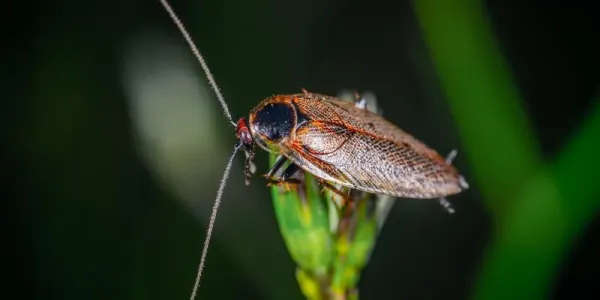
Cockroaches are flat-bodied, fast-moving insects that favor dark, tight spaces near food and moisture. They're most active at night, which is why an infestation can grow for weeks before anyone notices signs of one. Four species show up most often in Iowa homes, and each behaves a little differently.
Tan to light brown with two dark parallel stripes behind the head. About ½"–⅝" long. The most common indoor species — found in kitchens and bathrooms near food and water, and known for breeding quickly.
Reddish-brown and the largest of the group, up to 1½" long. Prefers basements, crawl spaces, and areas near drains or sewer lines. Often called a "palmetto bug."
Dark brown to black with a shiny body. Prefers cool, damp spots like floor drains and crawl spaces. Moves slower than other species and gives off a noticeable odor.
Smaller and lighter brown with faint banding across the body. Unlike the others, it prefers warm, dry areas — upper cabinets, behind picture frames, and near electronics.
When Are Cockroaches Most Active in Iowa?
Cockroach activity in Iowa follows the seasons more closely outdoors than indoors. Species like the American and Oriental cockroach slow down in cold weather, while indoor-dwelling German cockroaches stay active year-round wherever there's heat and moisture. Activity typically peaks in summer and picks up again in fall as outdoor roaches move inside ahead of the cold.
Warning Signs of a Cockroach Infestation
Cockroaches are nocturnal and stay hidden during the day, so most homeowners don't spot one directly until a population is already established. These are the signs to watch for.
What Attracts Cockroaches to Your Home
Cockroaches don't need much to move in — just a reliable food source, some moisture, and a way inside. Reducing the conditions below makes a home considerably less appealing to them.
Do Cockroaches Pose Any Health Risks?
Cockroaches can carry bacteria on their legs and bodies as they move between drains, garbage, and food surfaces, including strains linked to salmonella and E. coli. Their droppings, shed skins, and saliva also contain allergens that can trigger reactions in sensitive individuals — particularly asthma flare-ups, skin irritation, and nasal congestion.
The risk isn't usually acute or sudden. It builds the longer an infestation goes unaddressed, since allergen levels rise as the population grows.