Learning Center
Ants
Ants in Iowa
Iowa homes deal with a handful of common ant species, and they're not all the same kind of problem. Most are simply a kitchen nuisance — one, the carpenter ant, is worth knowing how to spot because of the damage it can quietly cause over time.
Common Ants in Iowa
| Species | Appearance | Where found | Concern level |
|---|---|---|---|
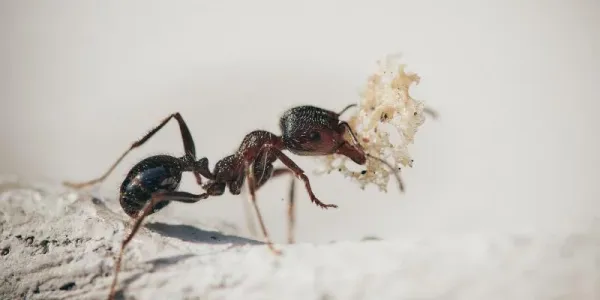
| Carpenter Ant | Large, shiny black — often ½" or more; some reddish-brown or two-toned | Damp or softened wood, wall voids, dead tree limbs | Structural risk |
| Odorous House Ant | Small, dark brown to black; gives off a strong odor when crushed | Kitchens, near moisture, often indoors after rain | Nuisance |
| Pavement Ant | Small, dark brown, faint parallel lines on the head and thorax | Under sidewalks, driveways, and foundation cracks | Nuisance |
| Pharaoh Ant | Tiny and pale yellow | Wall voids and heated buildings — active year-round indoors | Nuisance |
What Attracts Ants to Your Home
Signs of Carpenter Ant Activity
Carpenter ants don't eat wood — they tunnel through it to build nesting galleries, which means damage can build for a long time before it's noticed.
Watch for these together
Piles of fine, sawdust-like material (frass) near baseboards or window sills; faint rustling sounds inside walls; winged swarmer ants indoors in spring; or noticeably large black ants appearing inside during winter, when they wouldn't otherwise be active outdoors.
When Are Ants Most Active in Iowa?
Spring
Mating flights and swarming begin as most species become active with warming temperatures.
Summer
Foraging peaks — the season with the most indoor encounters, especially after rain.
Fall
Ants seek shelter and moisture as outdoor temperatures cool.
Winter
Most species go dormant outdoors, but pharaoh ants and established indoor colonies stay active year-round in heated spaces.
Your Questions About Ants Answered
How can I tell if I have carpenter ants or just odorous house ants?
Size is the biggest clue — carpenter ants are noticeably larger, often ½" or more. Odorous house ants are small and give off a strong, unpleasant smell when crushed. If you're seeing sawdust-like debris or winged ants indoors, that points to carpenter ants specifically.
Are ants in my kitchen a health risk?
Ants can track bacteria across surfaces and into food as they forage, which is more of a contamination concern than a direct health danger. It's still worth addressing rather than ignoring.
Why do I see ants right after it rains?
Heavy rain can flood outdoor ant nests, particularly for odorous house ants, pushing colonies to seek dry shelter — often indoors.
Will killing the ants I see get rid of the colony?
Rarely. Visible ants are a small fraction of the colony, and several species can split into multiple satellite nests. Treating what you see usually doesn't address the source.
How does professional ant control work?
Treatment typically starts with identifying the species and locating the nest or nests, since the right approach differs for a structural pest like carpenter ants versus a foraging nuisance ant.